
DHgate-online wholesale stores
dhgate.comShopping
4.1102.79K Reviews
- Version
- 7.1.9
- Installs
- 10.00M
- Age Rating
- Teen
Screenshots
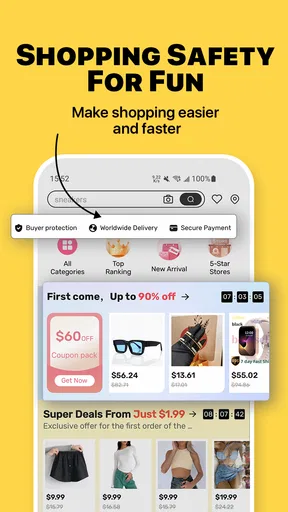
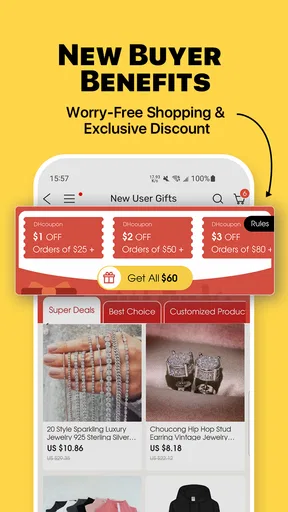
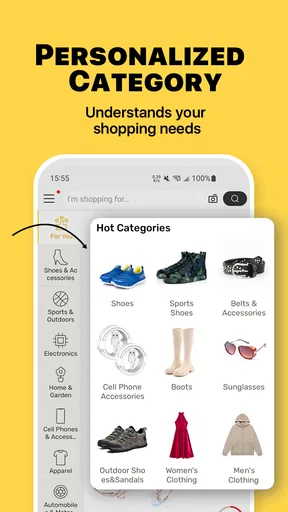
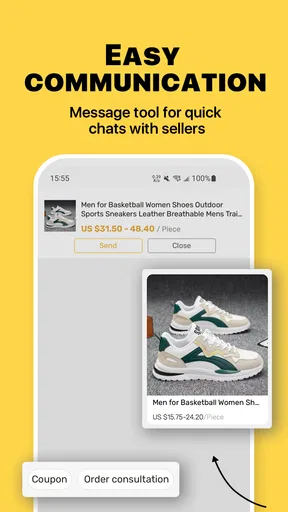

Our Review of DHgate-online wholesale stores
 Analysis by Appyee
I approached DHgate as a shopping app for people who want to browse wholesale-oriented stores from a phone rather than visit several separate retail sites. Its main appeal is the opportunity to compare a wide range of products and sellers in one place, but the experience is less about instant, effortless shopping and more about careful searching, checking details, and deciding whether a listing is worth the trade-off. In my experience, that difference matters more than the size of the catalog.
The app is free, belongs to the Shopping category, and is developed by dhgate.com. It has been available since September 14, 2016, and its current version is 7.1.4 for devices running iOS or Android 9 and later. The Teen content rating is worth noting for families who share devices, although the practical experience is still that of a general shopping marketplace. With an average rating of 4.1 from around 553 thousand ratings and more than 10 million installs, it is clearly used by a large audience rather than being a niche purchasing tool.
Wholesale browsing is the feature that defines the experience
The central capability is access to wholesale stores through a mobile marketplace. That sounds simple, but it changes how I use the app. Instead of opening it with one exact product and expecting a quick checkout, I find it more useful when I have a product idea, a target budget, or a need to compare several versions before choosing. The wholesale angle encourages broader browsing: different materials, quantities, seller offers, colors, and product variations can all affect the real value of a listing.
This is especially useful when ordinary retail alternatives offer only a small selection. A conventional shopping app usually makes it easy to buy a familiar branded item with predictable presentation. DHgate is more interesting when I am willing to investigate less familiar listings and make my own judgment. I can look for accessories, small business supplies, gifts, event items, or products that are difficult to find in nearby stores without treating the first result as the automatic winner.
The important strength is choice, not instant certainty. A large marketplace can expose options that a normal retailer would never show me, but it also puts more responsibility on me. I need to read the listing carefully, examine the available variations, and decide whether the seller’s offer matches what I actually need. The app rewards a patient shopper much more than someone who wants to tap the first attractive image and finish immediately.
That makes it different from a standard retail app in a meaningful way. Retail platforms often organize the experience around convenience and familiar product pages. DHgate feels more suited to discovery and comparison. I can search with a particular object in mind, but I also find value in exploring related listings and noticing how much the offer changes from one seller to another. For personal shopping, that can be enjoyable. For business-related buying, it can be the difference between finding a workable source and settling for a limited local selection.
How I use the app without rushing the decision
My most reliable workflow starts with a broad search and becomes more specific only after I understand what sellers are offering. If I search too narrowly at the beginning, I may miss alternative descriptions for the same type of item. Once I see the common wording and variations, I can refine the search and compare listings more intelligently. This is a small habit, but it prevents me from assuming that the first search phrase represents the entire selection.
I also treat the product page as a checklist rather than a sales pitch. I look at the exact variation selected, the quantity connected to the offer, the images, and any information that could change whether the item is suitable. A thumbnail may show several pieces or colors while the actual selection concerns only one option. I never rely on the main image alone, especially when I am considering multiple units or buying something for a specific event.
Another useful habit is separating “interesting” from “ready to buy.” I may save a listing mentally or keep it in my comparison process while checking similar offers. This prevents the common marketplace mistake of confusing a low-looking headline price with a genuinely good deal. The best offer is not always the one with the cheapest starting figure; it may be the one whose variation, quantity, quality clues, and delivery conditions make the total decision less risky.
For repeat shopping, I would keep notes outside the app about the seller, selected variation, and intended quantity before ordering. That sounds excessive for a casual purchase, but it becomes valuable when several listings look nearly identical. It also helps when I return later and cannot immediately remember why one offer seemed more suitable than another. The app makes discovery convenient, while disciplined comparison makes the discovery useful.
A realistic everyday use case
Imagine I am preparing decorations and small accessories for a community event. A local shop may have a few designs, but not enough styles or quantities to match the theme. I can use DHgate to explore several wholesale-oriented listings, compare the available designs, and identify which options appear suitable for the number of guests. The app is helpful here because I am not searching for one urgent item; I am looking for a range of possibilities and trying to keep the overall purchase sensible.
In that situation, I would not place the order immediately after finding an appealing image. I would first check whether the listing refers to one item or a group, whether the selected color is actually available, and whether the product description matches the event’s needs. I would also leave enough time for the purchase to make sense as a planned order rather than a last-minute rescue. DHgate works best when the shopper can absorb some uncertainty and plan around the decision.
The same approach applies to a small online seller testing a new product category. The app can be useful for researching what types of items are available and comparing offers before committing to a larger purchase. However, I would start cautiously. A marketplace listing can help me discover a possible source, but it should not replace checking samples, assessing consistency, and understanding whether the item is genuinely suitable for customers. The app supports sourcing research; it does not remove the need for sourcing judgment.
Where the wholesale model helps most
The wholesale focus has a practical advantage for buyers who need more than a single ordinary retail item. If I am buying supplies for an activity, preparing merchandise for a small project, or looking for several related products, the ability to browse stores with that kind of orientation is more relevant than a typical one-item shopping trip. I can think in terms of a collection or a planned purchase instead of treating every product as an isolated retail decision.
It can also help when I want to compare styles that local stores do not carry. The app gives me a broader starting point for research, which is useful even before I decide to buy. I may discover that my original idea is too expensive, too complicated, or available in a more practical form. That exploratory role is one of the strongest reasons to install it.
For a buyer who wants a familiar brand, a guaranteed local return process, or delivery that must fit a tight schedule, the advantage is smaller. In those cases, a conventional retailer may be the better choice even if its selection is narrower. DHgate’s value comes from access and comparison, so the more I prioritize certainty and speed over variety, the less compelling the app becomes.
The trade-offs I noticed while using it
The first trade-off is time. Browsing a wholesale marketplace can feel productive, but it can also become a long sequence of comparisons. Similar images and slightly different listing details make it easy to keep searching without improving the decision. I have to set a clear goal: find a suitable option within a reasonable range, not inspect every possible listing.
The second trade-off is confidence. A polished product image does not tell me everything I need to know. I have to pay attention to the written details and the exact option I am selecting. This is not a criticism unique to one marketplace, but the wholesale structure makes careful reading especially important because variations in quantity, finish, or configuration can have a bigger effect on the usefulness of the order.
The third trade-off is that the cheapest-looking offer may not be the best overall value. A lower starting price can be less attractive once I account for the selected version, the number of units, and the practical effort involved in waiting and checking the order. I therefore compare complete offers rather than using the first visible figure as my main filter. That is one of the most important lessons for anyone new to the app.
There is also a psychological trade-off. The abundance of products creates a sense that a better deal must be just one more search away. That can lead to unnecessary browsing or impulse purchases. I get better results when I decide in advance what qualities matter, what budget feels reasonable, and whether I am buying for immediate use or future planning. Without those boundaries, the app’s variety can work against me.
What I would check before placing an order
I would begin by confirming the product variation, because the main image and the selected option may not represent the same thing. Next, I would check the quantity and read the description for details that affect practical use. If I need a specific size, color, or configuration, I would make that requirement the deciding point rather than choosing based on appearance alone.
I would then compare several listings that seem genuinely equivalent. The purpose is not to find the lowest number at any cost, but to see whether the offer remains attractive when the same type of item and quantity are compared. This is a non-obvious advantage of using the app carefully: repeated listings can reveal which details are normal for the product and which claims deserve extra scrutiny.
For a time-sensitive purchase, I would be conservative. I would not use a marketplace discovery app as my only plan for an event happening very soon. If the item is essential and the deadline is fixed, a local retailer or a conventional platform with a delivery promise I already trust may be safer. DHgate is better for planned purchases where I have room to evaluate options and handle a less immediate shopping rhythm.
For a business purchase, I would separate a small trial from a larger commitment. The ability to browse wholesale stores is useful for finding possible products, but committing heavily based on one attractive listing is a poor workflow. A cautious buyer can use the app to narrow the field, then make a smaller initial decision before relying on the product for customers or a larger project.
Who will get the most from this app
I think DHgate suits curious shoppers, bargain researchers, small sellers, event planners, and anyone who values variety over a completely managed retail experience. It is particularly useful when I need to compare many versions of a product or explore wholesale-oriented offers from my phone. The free price also makes it easy to keep available as a research tool even when I am not ready to order immediately.
It is less suitable for someone who dislikes reading product details, wants every item to have the same predictable retail presentation, or needs a purchase with minimal decision-making. If I want to search, tap, and move on with almost no comparison, a more traditional shopping app would probably feel calmer. Likewise, people with a strict deadline should prioritize an option whose delivery process and local support fit that deadline better.
The app’s Teen rating means younger users may encounter it on a shared device, so I would still encourage sensible supervision around purchases and payment decisions. The rating does not change my overall view of the product, but it is a useful detail for households where several people use the same phone or tablet.
My final view after focusing on its real strength
DHgate is most convincing when I use it as a wholesale discovery and comparison tool rather than as a shortcut to an effortless purchase. Its broad marketplace can expose options that ordinary retail apps do not, and that makes it valuable for planned buying, small-scale sourcing, and projects that need variety. The app’s large user base and 4.1 average rating suggest that many shoppers find the format worthwhile, but my own recommendation comes with an important condition: the value depends on how carefully I shop.
I would recommend it to a friend who has time to compare listings, understands that product details matter, and wants access to wholesale stores from a mobile app. I would not recommend making it the default choice for urgent essentials, highly standardized branded goods, or purchases where a simple local return experience matters more than selection. Used with a clear checklist and a little patience, it is a practical shopping companion. Used impulsively, its abundance can become more frustrating than helpful.
My bottom line is straightforward: install it if your main question is “What options are available, and which offer deserves a closer look?” Choose a conventional retailer instead if your main question is “How quickly can I receive a familiar product with as little uncertainty as possible?” That distinction captures the real experience better than the wholesale label alone, and it is the reason I see DHgate as useful for the right shopper rather than universally ideal for everyone.
Privacy and Permissions
See what permissions an app requests and how it handles your data.
- Calendar
- read calendar events plus confidential information, add or modify calendar events and send email to guests without owners' knowledge
- Location
- approximate location (network-based), precise location (GPS and network-based)
- Phone
- read phone status and identity
- Photos/Media/Files
- access USB storage filesystem, read the contents of your USB storage, modify or delete the contents of your USB storage
- Storage
- read the contents of your USB storage, modify or delete the contents of your USB storage
- Camera
- take pictures and videos
- Wi-Fi connection information
- view Wi-Fi connections
- Device ID & call information
- read phone status and identity
- Other
- view network connections, read battery statistics, connect and disconnect from Wi-Fi, delete all app cache data, control flashlight, measure app storage space, full network access, change your audio settings, run at startup, draw over other apps, use accounts on the device, control vibration, prevent device from sleeping, modify system settings, install shortcuts, read Google service configuration
Verdict
Strengths of DHgate-online wholesale stores
- Wide range of products from electronics to fashion and home goods.
- Wholesale pricing can be attractive for bulk purchases.
- Buyer protection helps resolve disputes over missing or incorrect orders.
- Product ratings, reviews, and seller feedback aid purchasing decisions.
- International shipping options are available for many listings.
Limitations of DHgate-online wholesale stores
- Product quality can vary significantly between sellers.
- Delivery times may be long, especially with economy shipping.
- Import taxes and customs fees may apply to some orders.
- Some listings have high minimum order quantities.
- Returns can be complicated and shipping costs may not be refunded.
Similar Picks in This Category
View All
SHEIN-Shopping Online
Roadget Business PTE. LTD.4.8

Amazon Shopping
Amazon Mobile LLC4.4


Mercado Libre: Compras online
Mercado Libre4.8

Wish: Shop and Save
Wish US Holdings LLC4.7

Alibaba.com - B2B marketplace
Alibaba Mobile4.4
Frequently Asked Questions
What is DHgate, and what can I buy there?
DHgate is an online marketplace that connects shoppers with independent sellers, mainly offering wholesale and retail products at competitive prices. In the app, you can browse categories such as clothing, electronics, accessories, home goods, beauty products, and more. Product quality, shipping times, and seller service can vary, so it is important to read the listing carefully before placing an order.
Is DHgate safe to use for shopping?
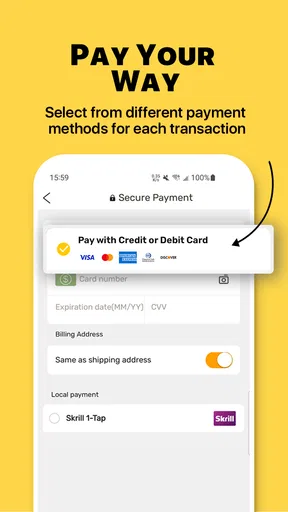
DHgate includes buyer-protection features, secure payment options, seller ratings, order tracking, and a dispute process intended to help resolve problems. However, the marketplace contains many third-party sellers, so the shopping experience is not identical for every order. Before buying, check the seller’s feedback, transaction history, customer photos, product description, and return conditions to reduce potential risks.
How long does shipping from DHgate usually take?
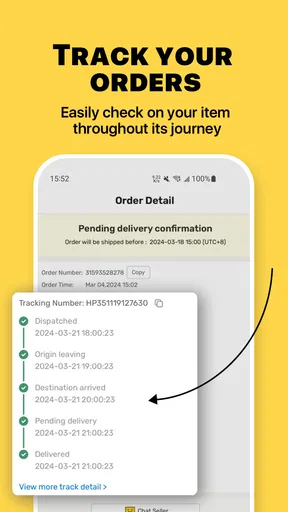
Shipping times on DHgate depend on the seller, warehouse location, destination country, and delivery method selected at checkout. Some orders may arrive within a couple of weeks, while economy shipping can take considerably longer. The app normally provides an estimated delivery window and tracking information, but customs inspections, holidays, and carrier delays may affect the final arrival date.
Can I return an item or request a refund on DHgate?
Returns and refunds are possible in certain situations, but the exact conditions depend on the seller, product category, and reason for the request. If an item is damaged, incorrect, counterfeit, or significantly different from its description, you should document the issue with photographs or video and contact the seller promptly. If the problem is not resolved, DHgate’s dispute system may be used.
Are DHgate products authentic, and should I expect extra fees?
Authenticity and product quality can differ because DHgate hosts independent sellers rather than selling every item directly itself. Branded products deserve particular caution, and unusually low prices may indicate replicas or unauthorized goods. Buyers may also need to pay customs duties, taxes, or import charges depending on local regulations. Review seller information and your country’s import rules before ordering.
